25 avril 2026 · Hicham El Ouali
Sidr jujube honey, treasure of the Atlas mountains
Rare and sought after, jujube honey is harvested once a year in the remote valleys of the Moroccan High Atlas.
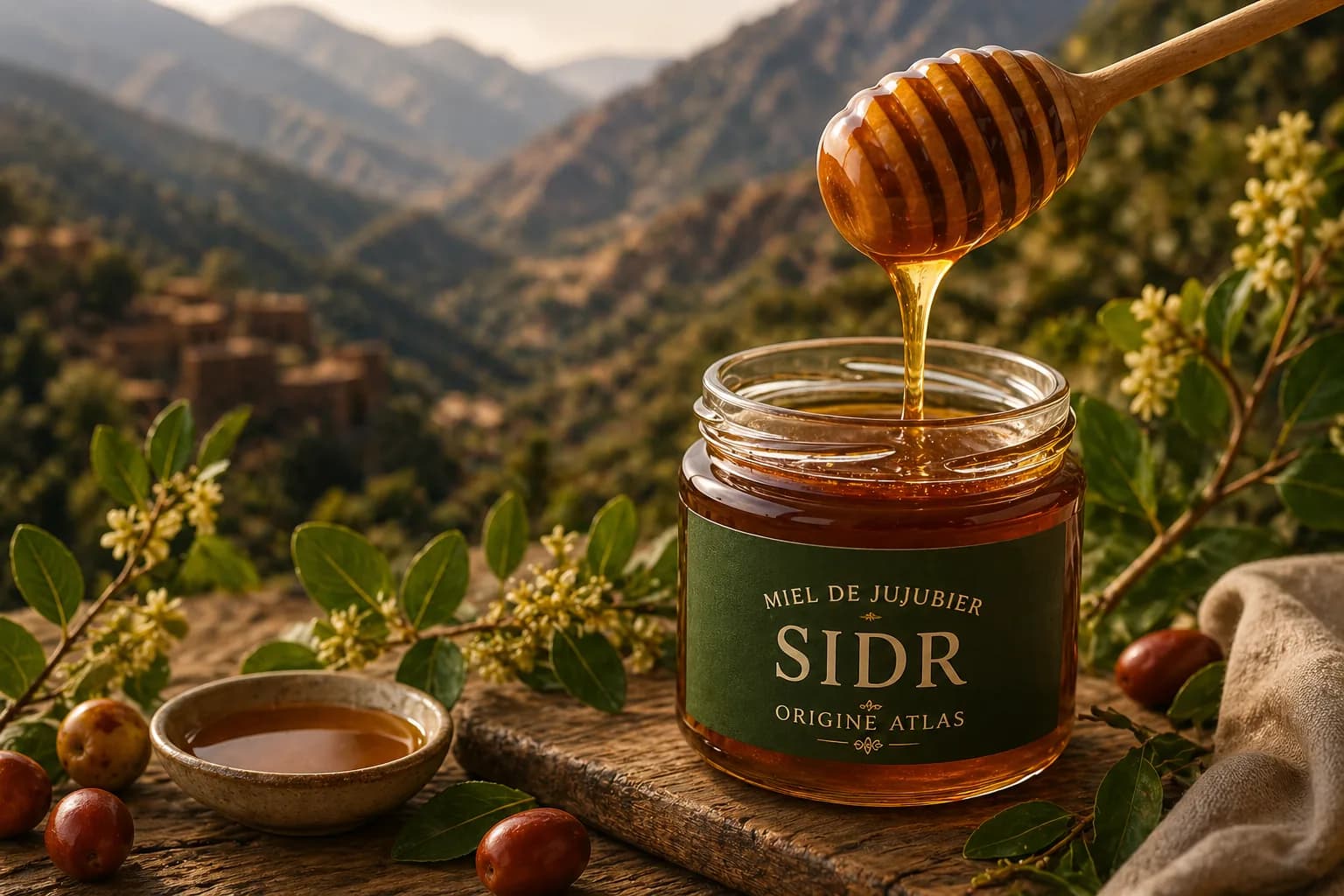
Among Moroccan honeys, jujube (Sidr) honey stands apart. Its woody, almost caramelised flavour and its scarcity make it a connoisseur's honey.
One harvest a year
The jujube tree flowers for only a few weeks, in late autumn. Beekeepers in the Atlas valleys sometimes walk for days to reach hives set in hard-to-access areas. That very short window explains both the limited volumes and the price of genuine jujube honey.
How to recognise it
- A deep amber colour that darkens further over time.
- A thick texture, slow to pour at room temperature.
- A woody, lingering taste, far from the floral sweetness of a wildflower honey.
- Slow crystallisation: not a flaw, simply a sign the honey has not been heated.
Storing and using it
Keep the jar closed, away from light and heat, and always use a dry spoon: moisture is honey's only real enemy. Jujube honey is best eaten by the spoon or on bread, without heating — boiling water erases most of its aroma.
Availability, and what to choose instead
Jujube honey is not available at the moment. The harvest is annual, and we would rather be out of stock than sell a honey whose origin we could not vouch for. If you are looking for a characterful honey today, these are in stock:
- Thyme honey — the closest in intensity, with a clear herbal bitterness.
- Carob honey — dark and woody too, rounder on the palate.
- Mountain (wildflower) honey — milder and more versatile, in 250 g or 500 g.
See all our honeys in the shop. Write to us if you would like to be told about the next jujube harvest.